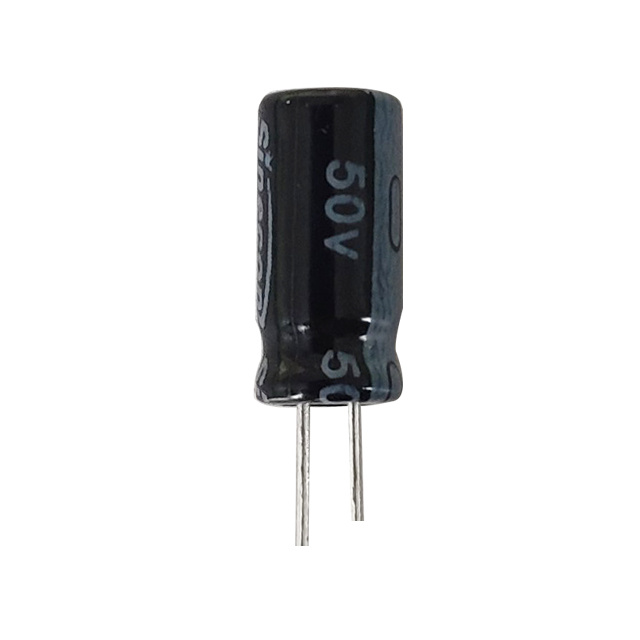
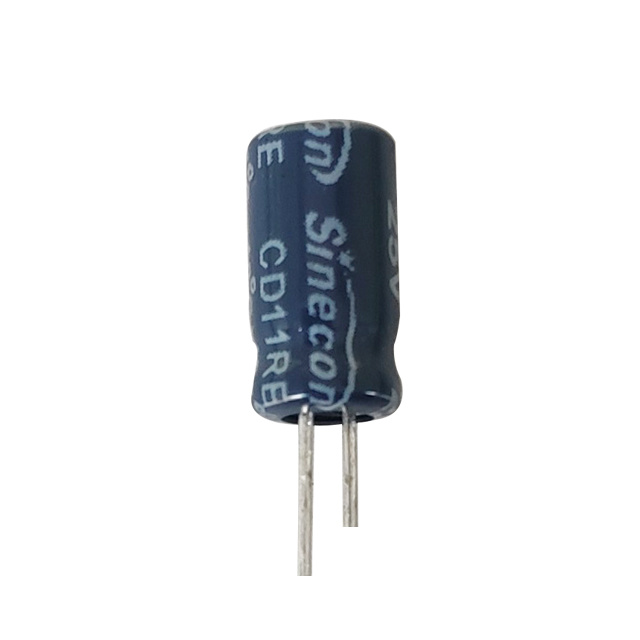
When comparing performance in low-temperature environments, Aluminum Polymer Capacitors maintain 85–95% of their rated capacitance at −40°C, while standard Aluminum Electrolytic Capacitors can lose 50–80% of their capacitance at the same temperature. This dramatic difference stems from the fundamental materials used in each type: liquid electrolyte versus solid conductive polymer. For engineers designing systems that must operate in freezing or sub-zero conditions — such as automotive electronics, outdoor industrial equipment, and aerospace applications — this distinction is critical to circuit reliability and long-term performance.
Why Liquid Electrolyte Is the Weakness of Aluminum Electrolytic Capacitors in the Cold
The core component of a standard electrolytic aluminum capacitor is its liquid electrolyte, typically an ethylene glycol-based or gamma-butyrolactone (GBL) solution. At room temperature (25°C), this electrolyte is fluid, highly conductive, and performs as expected. However, as temperatures drop toward −40°C, the viscosity of the liquid electrolyte increases dramatically — in some formulations it approaches a semi-frozen state. This causes two major problems:
- Ion mobility within the electrolyte drops sharply, increasing internal resistance (ESR) by a factor of 5× to 20× compared to room temperature values.
- Effective capacitance falls significantly because the electrolyte can no longer maintain intimate ionic contact with the anode oxide layer over the full surface area.
For example, an electrolytic aluminum capacitor rated at 1000 µF / 25V at 25°C may measure only 300–500 µF at −40°C under typical test conditions per IEC 60384-4 standards. This is not a defect but a fundamental physical limitation of the liquid electrolyte system.
How Aluminum Polymer Capacitors Overcome the Low-Temperature Problem
Aluminum Polymer Capacitors replace the liquid electrolyte with a solid conductive polymer layer, typically PEDOT (poly(3,4-ethylenedioxythiophene)) or polypyrrole. Because there is no liquid to freeze or increase in viscosity, the electrical conductivity of the polymer changes only minimally between −55°C and +105°C. This translates directly into stable capacitance values across the full operating range.
In standardized tests, Aluminum Polymer Capacitors typically show capacitance variation of only ±10–15% between −40°C and +85°C, compared to the ±50–80% variation seen in standard liquid-electrolyte types. Their ESR at −40°C also remains low — often under 20 mΩ for low-voltage types — while a comparable Aluminum Electrolytic Capacitor may exhibit ESR values exceeding 500 mΩ or more at the same temperature.
Head-to-Head Comparison: Capacitance Retention at −40°C
| Parameter | Aluminum Electrolytic Capacitor | Aluminum Polymer Capacitor |
|---|---|---|
| Capacitance Retention at −40°C | 20–50% of rated value | 85–95% of rated value |
| ESR at −40°C (typical 100µF/16V) | 300–600 mΩ | 10–25 mΩ |
| Electrolyte / Dielectric Medium | Liquid electrolyte (GBL or glycol-based) | Solid conductive polymer (PEDOT) |
| Ripple Current Handling at −40°C | Significantly derated (30–50%) | Minimal derating required |
| Cold-Startup Circuit Reliability | Risk of insufficient filtering / instability | Reliable, predictable performance |
| Typical Operating Temp Range | −40°C to +105°C (with derated performance) | −55°C to +105°C (stable performance) |
| Cost (relative, same capacitance/voltage) | Lower | 2×–4× higher |
The SMD Format: How Package Style Affects Cold-Temperature Behavior
Surface-mount device (SMD) versions of both capacitor types are widely used in compact electronic assemblies. A SMD aluminum electrolytic capacitor — the standard V-chip or SMD can type — retains all the vulnerabilities of its through-hole counterpart at low temperatures. Because SMD packages are generally smaller in volume, the total electrolyte volume is reduced, which can actually worsen the proportional impact of viscosity increase on capacitance at −40°C.
In contrast, SMD Aluminum Polymer Capacitors (available in both radial SMD and flat chip polymer formats) deliver their low-temperature advantages in a compact footprint. For high-density PCB designs that must operate in cold environments — such as automotive ECUs, industrial sensor nodes, or outdoor telecom equipment — the SMD aluminum electrolytic capacitor often becomes a limiting factor unless the design includes adequate derating margins or a circuit warm-up phase before full operation.
Engineers should also note that on a PCB subjected to cold-soak conditions (where the entire assembly reaches −40°C before power-on), the cold-startup transient will draw peak currents that the SMD aluminum electrolytic capacitor cannot adequately filter due to its reduced capacitance and elevated ESR in those conditions.
Application Scenarios Where the Difference Matters Most
Automotive Electronics
Automotive environments regularly expose components to −40°C during cold starts. Power supply filtering capacitors in engine control units (ECUs), transmission controllers, and advanced driver-assistance systems (ADAS) must maintain adequate bulk capacitance at startup. In these contexts, standard Aluminum Electrolytic Capacitors often require substantial oversizing — sometimes 3× to 5× the nominal capacitance — to ensure minimum required filtering capacity at −40°C, whereas Aluminum Polymer Capacitors can be selected at or near nominal values.
Industrial Outdoor Equipment
Industrial sensors, remote monitoring systems, and outdoor inverters in cold climates must remain operational across wide temperature swings. A power supply using standard Aluminum Electrolytic Capacitors risks increased output voltage ripple or control loop instability during cold-morning startup due to the reduced effective capacitance and high ESR.
Aerospace and Defense
Avionics and military electronics must often qualify to MIL-STD-810 or similar standards that include operation down to −55°C. In these applications, Aluminum Polymer Capacitors are increasingly preferred, or alternatively, specialized low-temperature Aluminum Electrolytic Capacitors with proprietary electrolyte formulations are used — though these come at significantly higher cost and often with reduced voltage ratings.
Strategies for Using Aluminum Electrolytic Capacitors in Cold Applications
Despite their limitations, standard Aluminum Electrolytic Capacitors can still be used in low-temperature applications with the following design strategies:
- Apply a capacitance derating factor of 2× to 4× when sizing for −40°C operation to ensure the effective capacitance meets the circuit minimum at temperature.
- Use low-temperature grade electrolytes — many manufacturers offer Aluminum Electrolytic Capacitors with glycol-free electrolytes or special additives that reduce viscosity increase at low temperatures, improving cold performance to 60–70% capacitance retention instead of 20–50%.
- Design for a warm-up delay in non-time-critical systems — allowing the board to self-heat for 30–60 seconds before demanding full load — can shift the operating point to a temperature where the Aluminum Electrolytic Capacitor performs more closely to its rating.
- Consider parallel combinations: placing multiple smaller Aluminum Electrolytic Capacitors in parallel can reduce net ESR and distribute ripple current, partially compensating for individual unit degradation at cold temperatures.
The choice between Aluminum Electrolytic Capacitors and Aluminum Polymer Capacitors at −40°C ultimately comes down to the trade-off between cost and performance stability. Aluminum Polymer Capacitors are the superior choice for capacitance retention, ESR stability, and ripple current handling in cold environments, but they cost significantly more per unit. Standard Aluminum Electrolytic Capacitors remain viable in cost-sensitive designs where careful derating, low-temperature grade selection, and system-level design accommodations can compensate for their reduced performance.
For any application where cold-startup reliability is mission-critical — automotive safety systems, medical devices, or defense electronics — the performance advantages of Aluminum Polymer Capacitors, including their SMD variants for compact board designs, justify the additional cost. For less demanding consumer or industrial applications with controlled environments, a properly derated electrolytic aluminum capacitor using a low-temperature-grade electrolyte can continue to be the cost-effective solution of choice.